Andy Novick portrait

AI discoveries & other curiosities

Author: Andy Novick

  • Why I bought SpaceX

    Why I bought SpaceX

    [TL;DR] I watched rocket launches as a kid and wanted to be an astronaut. SPCX is expensive but still might go up. Buying was an emotional decision: YOLO!

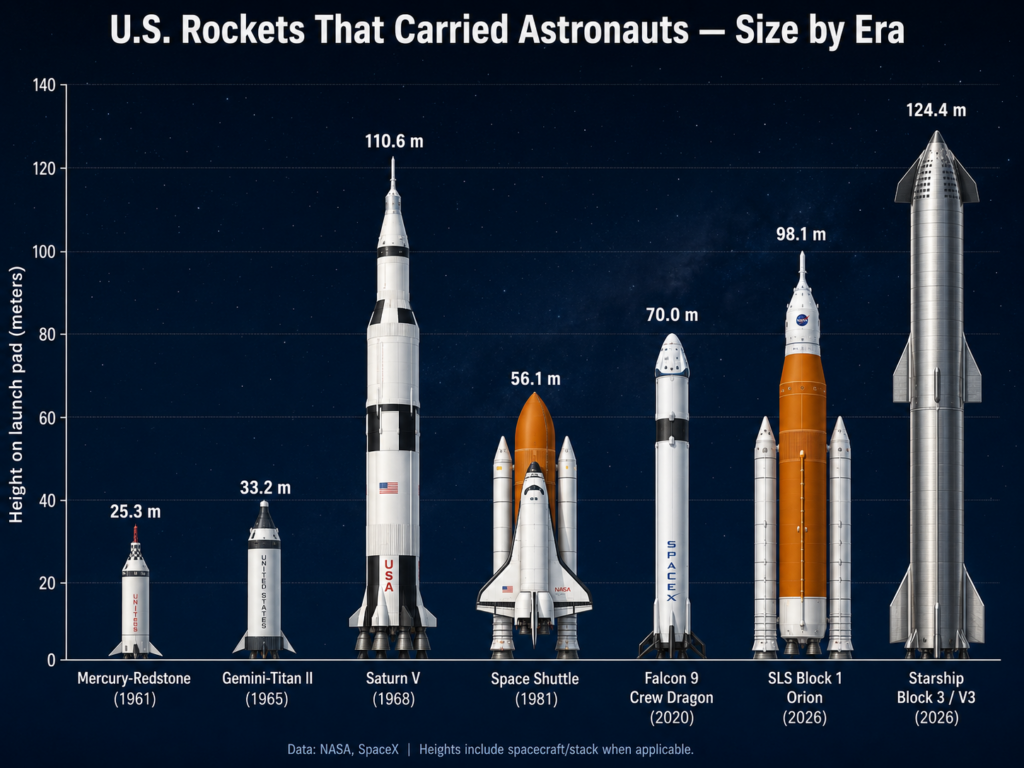
    On May 5, 1961 when Alan Shepard took his 15 minute ride into space, starting at 9:34 AM, I was four and at home with Mom and two siblings. At 9:47 AM, February 20, 1962, when John Glenn went to orbit, I was five and in kindergarten, but in the afternoon session. I’m pretty sure Mom had the TV on to both broadcasts and I was able to watch at least some of them. Those early memories are fuzzy but later launches stuck. I recall distinctly a Saturday morning watching one of the Gemini launches in my sisters’ room because one of them was sick. Dad moved a TV into the room and we played on the floor while riding out the “ground holds”. I was around eight at the time. What an adventure, I wanted to be on the top of that rocket launching into space. I also wanted to be a Cowboy and the second baseman for the New York Mets, like Ron Hunt.


    When SpaceX announced its IPO my investor instincts kicked in. The share price is as astronomical as the rockets. As a prudent investor buying into an IPO at 95 times revenue didn’t seem a good choice. I spent some time with ChatGPT analyzing the dynamics of the next few months with the smallish float and SPCX being included in the indexes very quickly possibly causing a sneeze. But! Shares will be coming onto the market unusually quickly. They could thread the needle and manage a smooth liftoff. Or! They could blow up like some of last year’s Starship launches or the New Glenn’s gigantic explosion on the test stand last week. The Move-Fast-and-Break-Things ethos that SpaceX brought to rocketry from Silicon Valley requires breaking things.

    Peter Diamandis, of XPrize fame, is as optimistic about the future as possible. Here’s his take:

    “People are trying to price SpaceX like a normal tech company. It isn’t one. It’s three converging businesses—the launch monopoly, the Starlink cash engine, and an AI frontier lab—wrapped around a single thesis: We’re in the Singularity. You’re not buying revenue. You’re buying into humanity’s future economy.” – Peter Diamandis


    In the end, it was an emotional decision. How could I not buy at least a little SpaceX? It’s the premiere company of the space age that we’re so lucky to be living through. Kind of like being in on the first days of the railroads in the 1850s. Or maybe it’s like investing in the Dutch East India Company in 1602.

    I put in for two hundred shares, hoping to get at least a few. Kudos to Fidelity for managing what must have been a lot of interest. I ended up with a hundred shares. I’ll hold on to them for a long time.


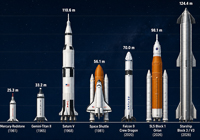
    Below are the rockets I’ve watched take astronauts into space.

  • Halibut Point State Park

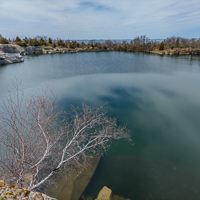
    Halibut Point State Park

    A quick visit on a cool Saturday afternoon made for a pleasant walk. Even better was the lobster roll at the Lobster Pot, just outside the park in Rockport.

  • 2025 Elkhorn Slough Photos

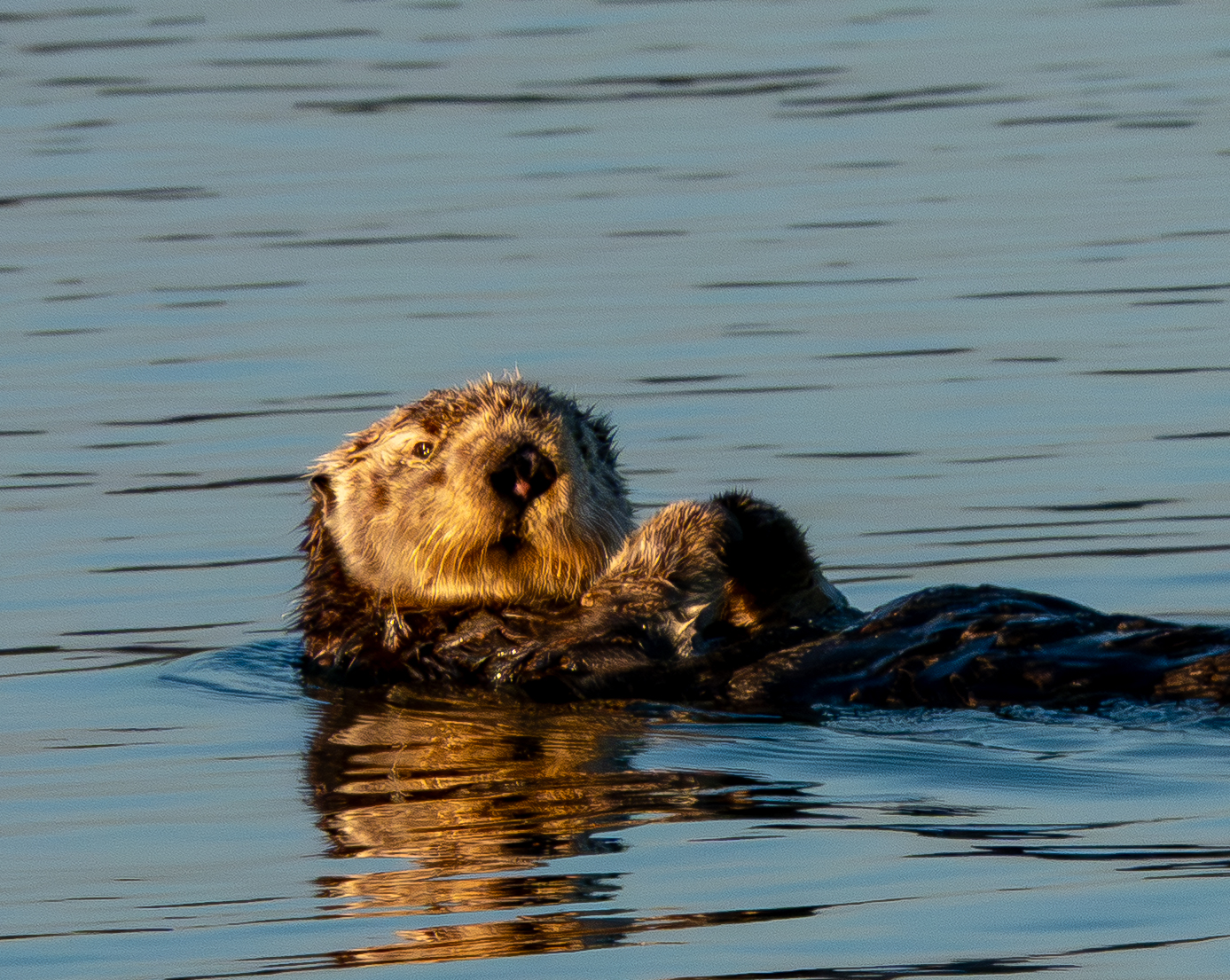
    2025 Elkhorn Slough Photos

    Elkhorn Slough (sloo) is a tidal wetland and estuary on Monterey Bay, California, near Moss Landing. The whole areas known for sea otters, harbor seals, sea lions, salt marshes, and hundreds of bird species.

  • Backyard Oddities

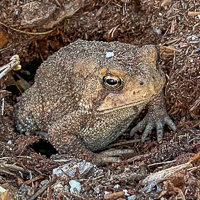
    Backyard Oddities

    Our backyard in Sudbury, Massachusetts brings a variety of quirky images. Its a delight to live with so much nature.

  • What I’m Learning About AI-Assisted Coding

    What I’m Learning About AI-Assisted Coding

    I’ve written software since 1971. Since the mid-1980’s I’ve heard that a new computer program is going to write the code from now on instead of programmers. That’s left me with skepticism about what AI might do. After spending time with them, here are a few early impressions.

    AI can write working code

    I started in March of 2025 coding with the chatbots. The CLI and VS Code based tools were only beginning to appear. But given a fairly simple problem in writing SQL the chatbots were able to produce working code. ChatGPT and Gemini were able to write some code but Grok went past that and found a bug in the code it was give to to adapt and fixed it. Now all the foundational models are good at code. The harnesses, like Claude Code, Codex, Cursor, and JetBrains, have taken that further and are very good at it. I documented that experience here:

    Testing still matters

    The AI tools are confident even when wrong, so testing matters more than ever, not less. The good news is that debugging skills are still useful. However, I’m working on some projects were I’ve not looked at the code and have interacted with the AI by doing my own testing and then going back and requesting changes like a typical user might.

    Image Generation Isn’t so Great

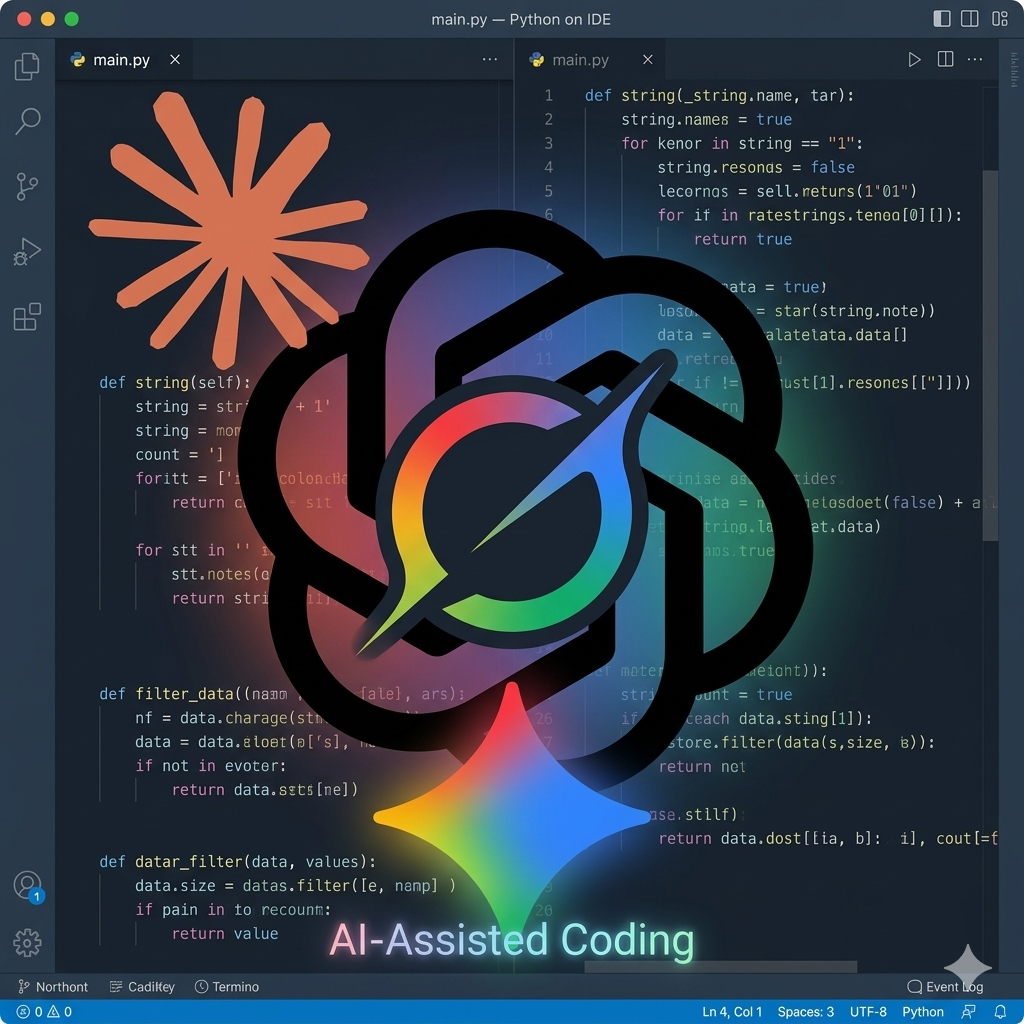
    Given the logos of Gemini, Grok, Claude, and ChatGPT, I asked each:

    Using the four logos provided make an image for the theme of AI-Assisted coding. Include a few lines of code somewhere in the image, maybe in the backround. Make sure to produce a square image.

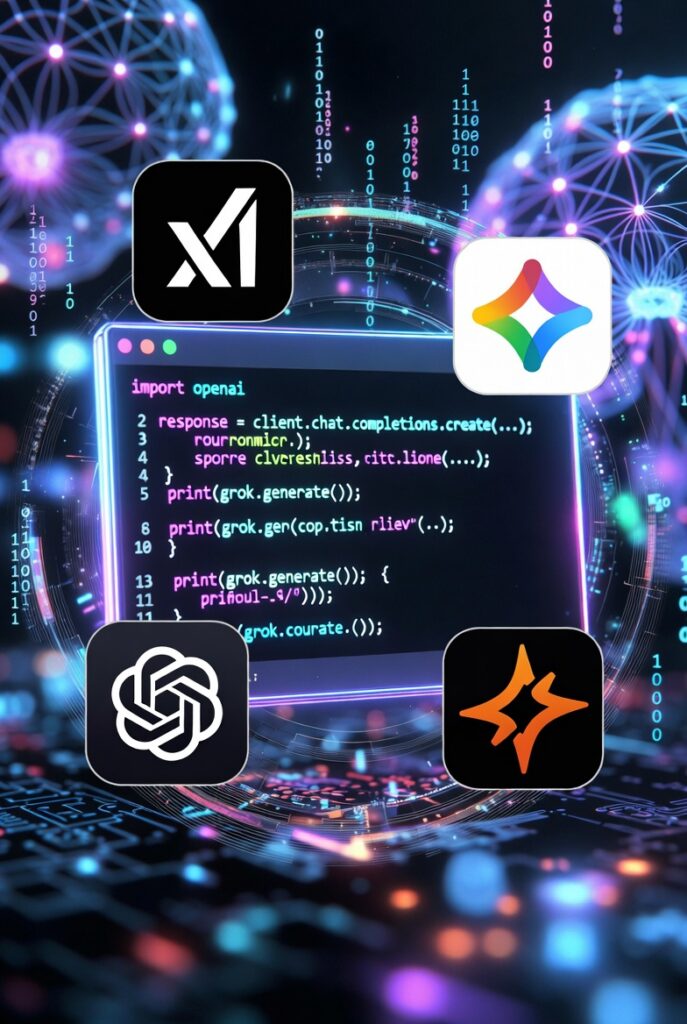
    The results were pretty bad. They all butchered at least two of the logos. Most of the output wasn’t square. The image at the top of this post is from ChatGPT and here’s a try from Grok.

    Grok's attempt at a four logo AI-Assisted Coding
    Grok First Try

    If you’re exploring the same territory, I’d love to compare experiences.

  • Welcome to AndyNovick.com

    Welcome to AndyNovick.com

    Hello, and welcome. I’m Andy Novick, and this is my new corner of the web. It’s going to be a place to write about whatever makes me curious, share links to my projects, and keep a record of what I’m learning along the way.

    For a long time my online life was scattered across a handful of places: code on GitHub, photos on SmugMug, SQL articles on Novick Software, and an older personal blog called Andy’s Guy Stuff. This site is my attempt to pull those threads together into one home, with a blog at the center of it.

    The blog is the heart of the site. For now, much of what I write here will fall under the category of AI Discoveries. These will be notes from my ongoing experiments with AI tools and AI-assisted coding. I expect it to wander into photography, programming, and the occasional thought about a book, a movie, or something happening in the world.

    If you want to find my other work, the footer below has links to everything. Thanks for stopping by.

  • 2026 Florida

    2026 Florida

    Another March trip to Sarasota was very relaxing. I captured several large birds. The new aquarium was a highlight of the trip.

  • Making use of AI in 2025 – The year in Review

    Making use of AI in 2025 – The year in Review

    I’ve tried to keep up with what AI makes possible. Here’s a rundown of the projects I used AI for during 2025.

    T-SQL coding with AI

    In March, I decided to see if AI would write T-SQL, the programming language of SQL Server. None of the programing tools were geared to SQL, I used an AI chat interface. I created a scenario for a Simple ETL project somewhat similar to projects I have been doing for my consulting client. Grok did the best job and even found and fixed a bug that was in the prototype code I had hacked together. Pretty impressive and I did a YouTube about it here: https://www.youtube.com/watch?v=G7eHQKerVMk The code is published on GitHub here TSQL_Codegen1

    Book Review of CO-INTELLIGENCE: Living and Working with AI By Ethan Mollick

    This was posted on Linked-in. I wrote the review myself with only grammar and spelling help from AI. It got more attention than I expected. Here’s the review.

    Writing books for my granddaughters

    I wrote two books for the granddaughters, ages 7 and 4. The first one, Saving the Constitution, coincided with a trip to New Hampshire for the Independence Day holiday. It was about the two of them as teenagers living in Philadelphia on July 4th, 1776. They had to help Thomas Jefferson complete the wording to the Declaration of Independence. ChatGPT helped with the writing, story line, and pictures. AI struggled to keep maintain consistent character appearances across illustrations, but the results were still acceptable. The Papa Andy character came out looking like Ben Franklin in one picture and like a 40 year old farmer in another. The girls loved it.

    Later in the summer when I had a plan to turn a freezer box into a rocket ship for them to play with, I wrote Astrid and Frieda go to Mars. Now in early adulthood, they had to travel together to Mars to deliver the first human born on Mars. This time I think I did a better job of prompting and the story and pictures were more consistent. ChatGPT’s Studio Ghibli style had just come out and that worked very well.

    Tech Support

    This is a lifesaver. I’ve been using computers for 55 years, mostly as a developer. While I have extensive programming experience, my knowledge of technical environments such as cloud services, Linux, and networking is more fragmented. Now I get technical support as good as Neal, who supported the last office where I spent a lot of time. He’s very good, for a human, on the topics he knows like Windows, networks, and storage, but he doesn’t know every topic. Grok and Gemini seem to know all topics and lay out step-by-step instructions to solve each problem or implement each new function. They make mistakes and are willing to correct them, just like Neal. Unlike Neal, they won’t do the implementation for me. Maybe next year.

    Trip Planning

    My wife and I took two trips out west this fall the first in October to Utah and the second in November to California. Gemini was key to making our trip to the parks in Utah very special and very easy. The key was laying out the route: Zion, Bryce Capital Reef, Arches, Canyonlands, Monument Valley, and Page, which has Horseshoe Bend and the slot canyons. Then it helped us fill in the details for each day. If felt similar to the personalized service we once received from old-time travel agents. If you’re thinking of a trip, don’t fail to ask your AI for help.

    Cookoff1

    We hosted the annual Christmas party for four families who share German traditions. To make it fun, this years party included a cooking contest. Cookoff1 is a Python web app built with Flask, developed in PyCharm and it’s AI tool, Junie. There are three pages: Setup, Voting, and Results. I ran it on my desktop machine and exposed only to the home network. The users got connected with either their phone or iPad and entered their votes. I brought up the results page on the living room TV for the big reveal. You can see it in the GitHub repo.

    NoSave

    This is a small windows app with a single multi-line textbox written in C# using Visual Studio 2026 Community Edition and GitHub CoPilot. It never saves text pasted into it. I use it as a place to paste passwords so that they’re not in the clipboard history. Windows can save a history of clipboard strings, but that leaves you vulnerable to another unrelated app grabbing them, So I’ve turned that feature off. I could use Notepad to save a password for a few minutes, but that gets saved, sometimes across reboots, so I don’t use that. NoSave just holds the password. It includes a feature to discourage screenshots, though it isn’t fully reliable. NoSave is a work in progress, there is no public repo yet.

    Daily News Summary

    After cataract surgery I found it uncomfortable to read the newspaper (Wall Street Journal) with any set of reading glasses, so I decided to try something different. I canceled my subscription ending a 60-year habit of reading newspapers, going back to forth grade. For about 6 years I also delivered the Standard Star, New Rochelle’s newspaper. I replaced the paper with e-mail subscriptions across the political spectrum: from CNN and Axios to The Hill and Just the News, and read them in the morning. They newsletters duplicate each other so it became a bit tiresome to read them all. I decided to try getting a news summary using Gemini. Using the chat interface, at 6:30 AM and 5:30 PM it reads my Gmail account for the day’s news and produces a pretty reasonable summary of the ten most important events. I instructed it to cite each source used for each summary, and it did so. Then it started sneaking in other sources, with citations. I’ll have to address that in the prompt and I’ll be adding summaries for AI news, sports, and business/investment news next year. Or, I could just read the Babylon Bee.

    In-app AI

    In the second half of 2025 many applications have introduced AI assistants, and I’ve been taking advantage of them. Photoshop is one. Removing people where I don’t want them is fantastic. Masking the sky without spending 10 minutes building a precise mask! That’s amazing. I love it. The photo club I belong to isn’t as excited and it’s been the subject of some new rules about contest submissions. I’ve also used the AI in Word, Excel, Notion, and several other programs. I’m hoping my tax prep software will include an AI assistant next year.

    More Chats

    I did lots and lots of chats this year. I made pretty good use of ChatGPT, Gemini, and Grok, and occasional use of Perplexity and Claude. For me, chat has replaced most search. I expect it to continue to do so next year.

    2026?

    What’s ahead? More programming for me. I’ll flesh out the news app and NoSave into more useful tools. I’m going to devote some time to research topics, such as diet and metabolism, using NotebookLM. Writing some more is on the table. I’m not sure about what. I’ll try and find a technical SQL with AI topic to present.

    I listen to some AI enthusiasts like Moonshots and Nate B. Jones on YouTube. They’re telling us that AI is on an exponential curve that’s going to make it more intelligent at an increasingly faster pace than in 2025. AI has changed faster and faster and now the rate of change is increasing. Second derivatives to the moon! Will we get our robots? Maybe full self-driving? Hold on to your hat!
  • 2025 Northern California

    2025 Northern California

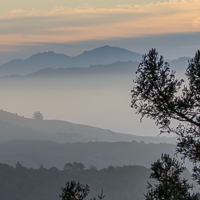
    A fall trip along the Northern California coast starting from the Big Sur, the Bixby Bridge and the lone cypress at Pebble Beach. Then up to the Mill Valley and Muir Woods.

  • Monument Valley October 2025

    Monument Valley October 2025

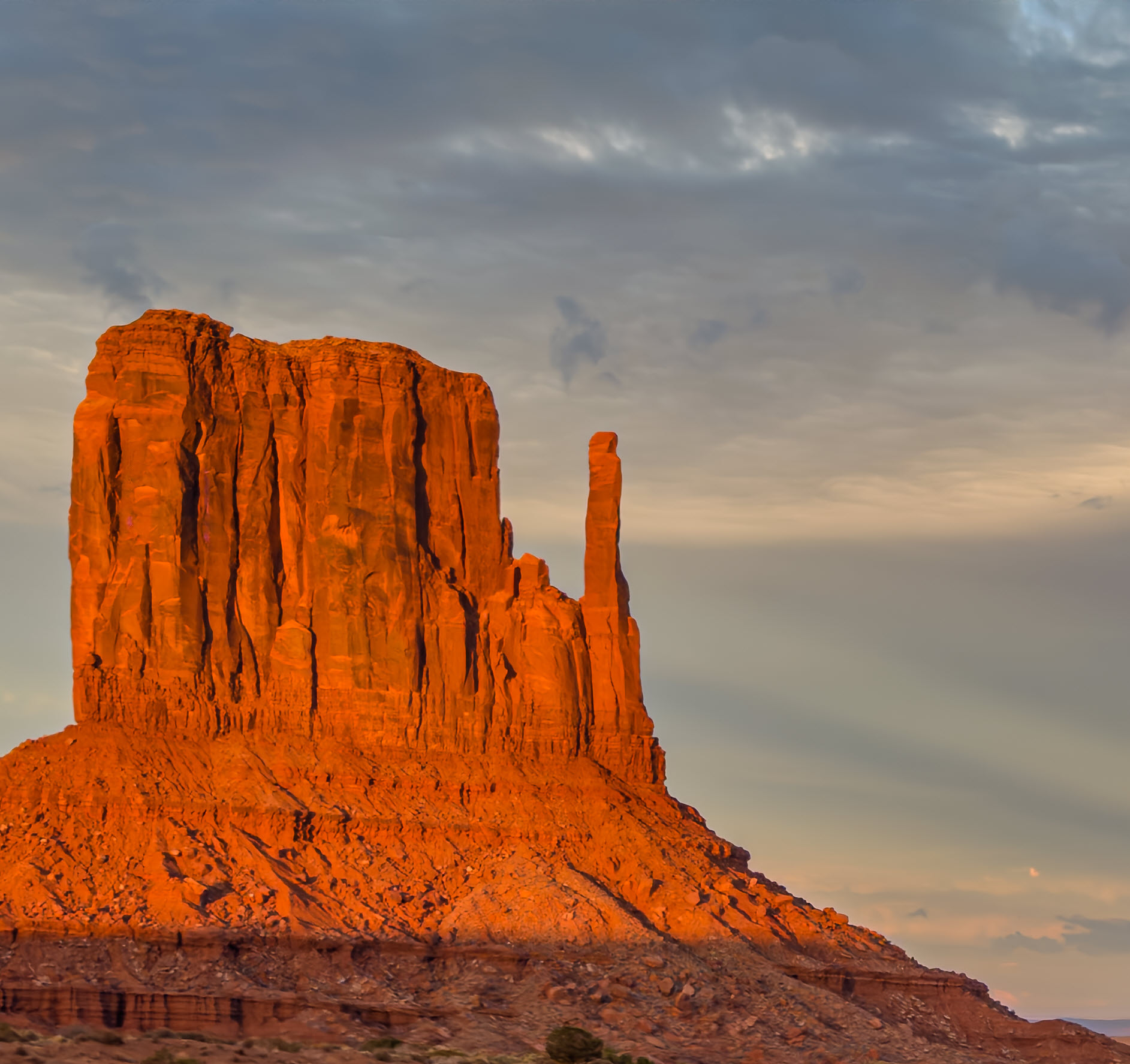
    I used to think that the buttes that dominated the background for all of John Ford’s movies were all over the west. Well, no. Ford shot a many, maybe most, of his movies in Monument Valley. For example, one of my favorites, the Searchers, which is about Texas cattlemen, features Monument Valley as a background. It wasn’t just Ford. Monument Valley became the iconic image of the American West. Three days hardly did it justice, but the weather and the sun were very cooperative.

    Most of the Valley is in the Navajo Reservation. They’ve done a nice job of making it accessible to the public while keeping the jobs and revenue for themselves.