Would you take medical advice from an AI? It turns out that a lot of people are doing just that and I gave it a try. I have a problem with both my ring fingers where the tendon catches something and the finger get’s stuck temporarily: it’s called trigger-finger. My massage therapist, Chris Howard, has been helping with cupping, but I thought an AI consultation would be a good next step. A few months ago I raised the issue with ChatGPT, but didn’t get much help. Now, it’s August 2026, so time to try again. Here’s my prompt:
I have a problem with trigger-finger in both hands. I have a wrist brace that I’ve used for wrist pain caused by computer use, but that doesn’t help because it doesn’t extend to the fingers. I’ve found that placing my hand flat under the pillow gives me less pain in the morning. Can you research and find an appropriate wrist brace, particularly for my right hand. I’m thinking that at worst, a baseball sliding glove might help, but the medical profession must make something better.
I’ll paste Claude’s response below. The answer was pretty good. I bought the cheaper Featol brace and it helps. I also bought the Oval-8 Finger Splits and they work very well and I can wear them much more often. So far – So good. A solid improvement and the tendons in my fingers are getting a chance to heal.
Here’s Claude’s (Opus 5) answer:
Your instinct is right, and so is the pillow trick — it’s actually the mechanism behind the standard treatment.
Why your wrist brace does nothing
Trigger finger is the flexor tendon catching as it passes through a tight pulley at the base of the finger (in the palm, not the wrist). A wrist brace immobilizes the wrong joint entirely. The pillow helps because during sleep your hand curls into a loose fist, which is precisely the position that aggravates the tendon and explains why mornings feel worst. The American Society for Surgery of the Hand also notes that when you lie down, fluid pools in the hands, and that swelling makes locking more likely overnight. Flat under the pillow keeps the tendon extended and lightly compressed. You’ve been improvising a night splint. Dr. ArthritisMedical News Today
For nights: a resting hand splint (this is the pillow, engineered)
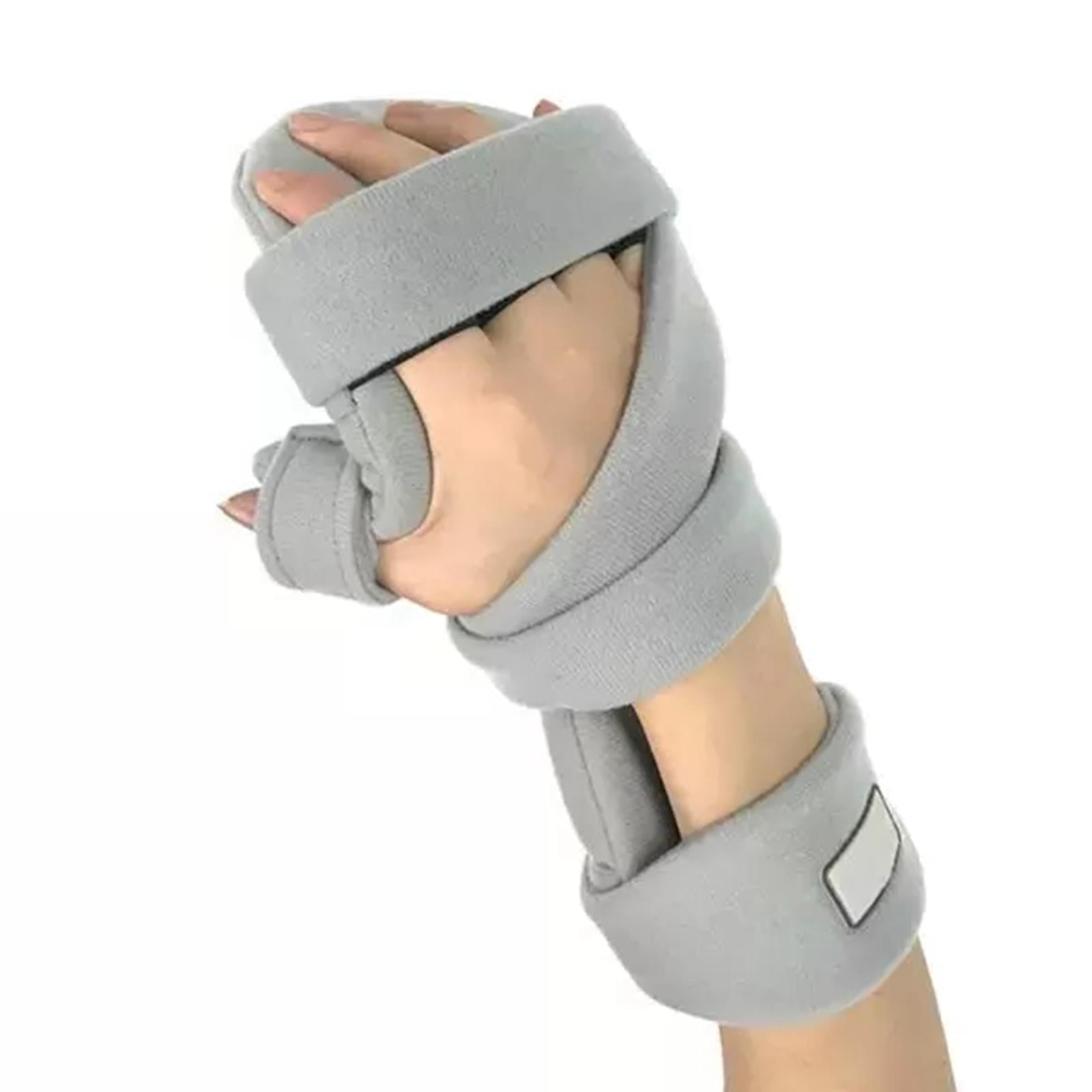
This is the category you want if multiple fingers are involved in both hands. It’s a padded pan that holds the wrist and knuckles in neutral with the fingers laid out flat.
Specific options, roughly cheapest to nicest:
OTC 2385 Soft Resting Hand Splint (~$30–40) — rigid molded plastic shell with a washable fabric cover; it holds fingers, wrist, and thumb in a functional position and is sold in left/right versions.
The Comforter Splint (3-Point Products, ~$60–70) — this is the one hand therapists actually reach for. It supports the wrist and MCP knuckles in neutral with adjustable stays, while the finger joints stay free. Softly padded, which matters when you’re wearing it eight hours a night for two months.
Amazon has a swarm of near-identical Featol / BraceAbility / Fanwer resting splints in the $25–35 range. They’re stroke-rehab products repurposed for this, and they work, but the padding is hit-or-miss.
For days at the keyboard: a small finger splint, not a hand brace
A resting splint makes typing impossible. Here the evidence has shifted toward the smallest effective splint:
3pointproducts
bttnusa
stockxmedical
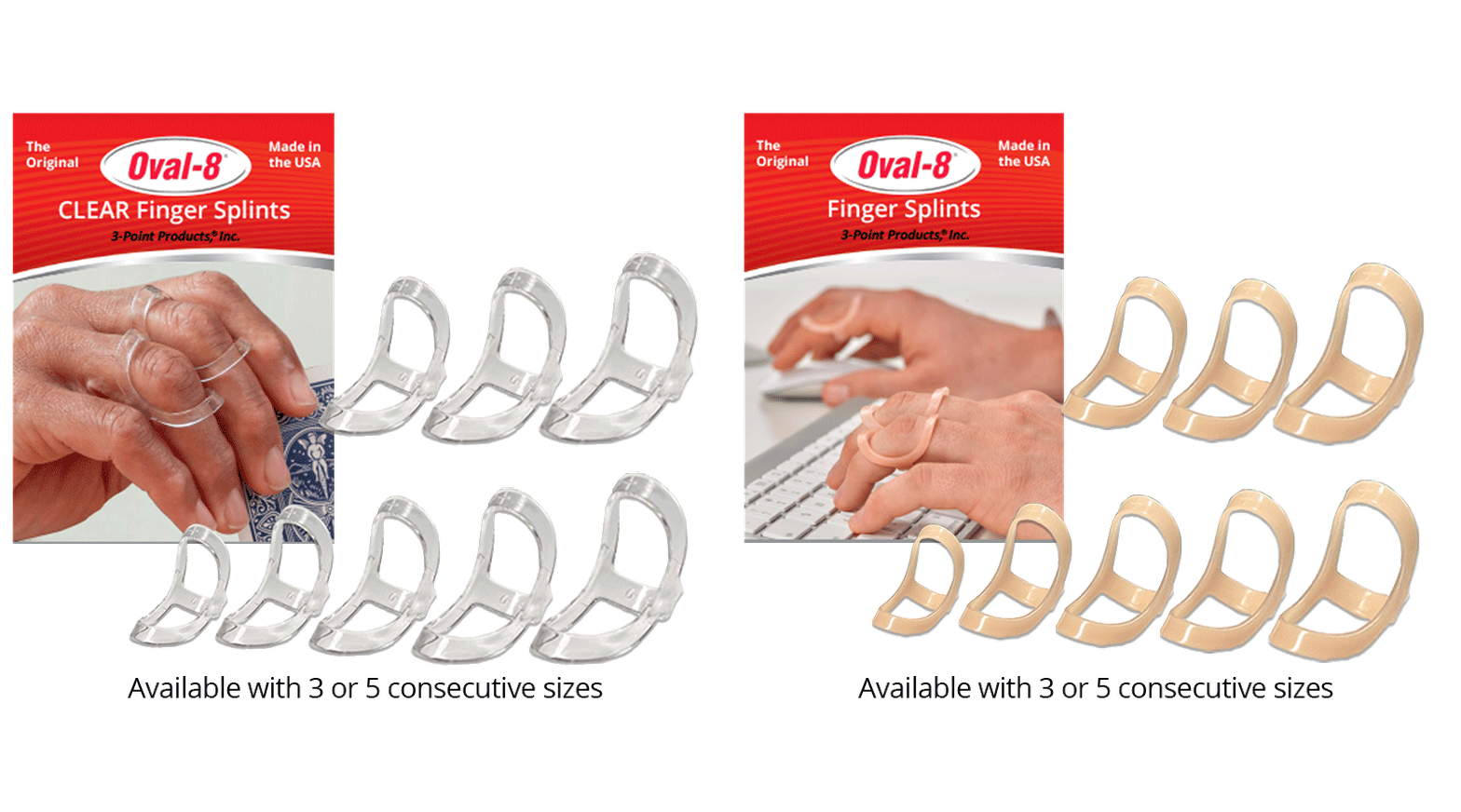
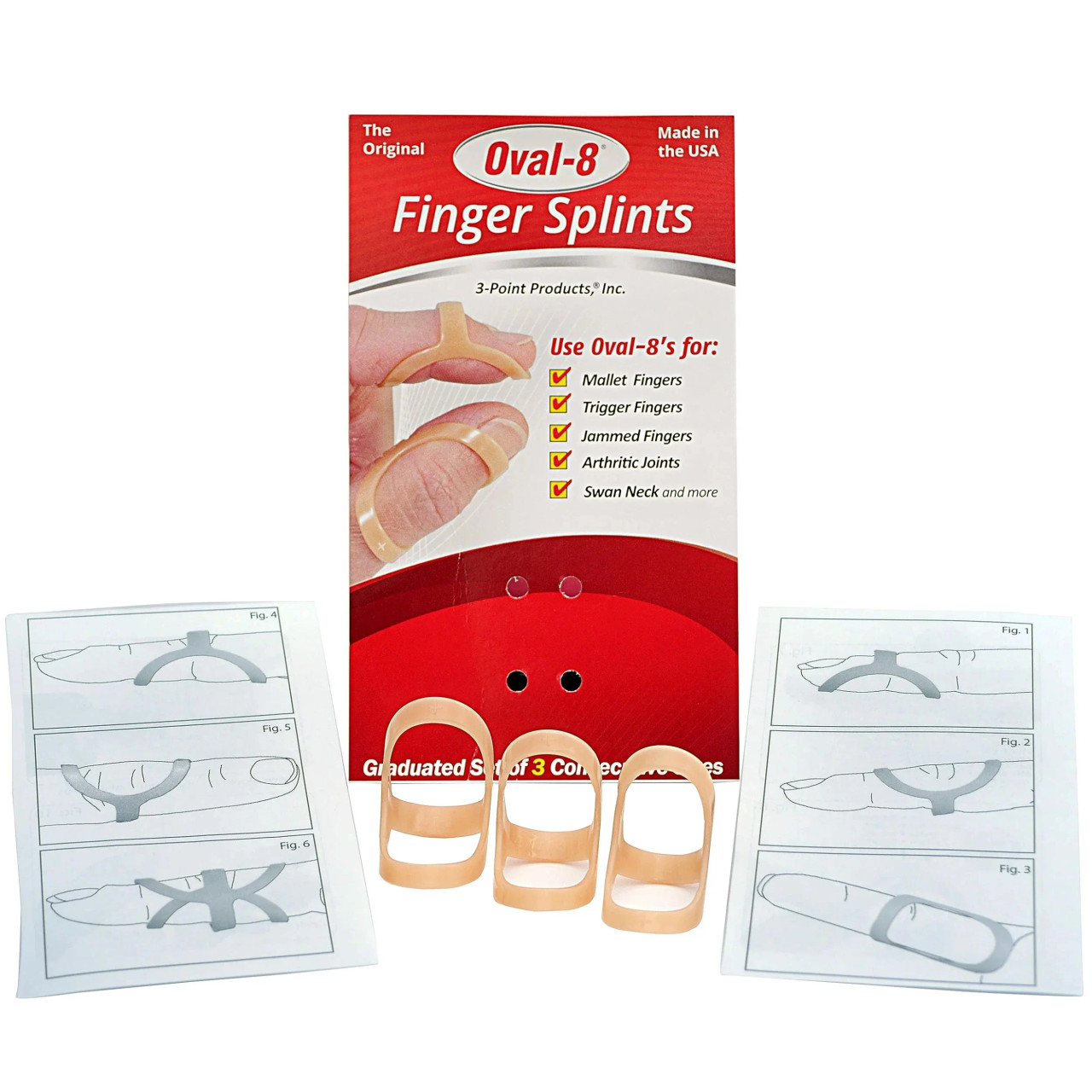
The Oval-8 is a thin figure-eight plastic ring worn at the middle knuckle. A randomized trial comparing it against a custom MCP-blocking splint found pain reduction in both groups, but greater with the PIP (Oval-8) splint, along with better function scores — largely because patients could tolerate wearing it far longer during the day. The older, larger MCP-blocking splint (a palm-based piece with a ring around the finger base) still has good data behind it — 77% of subjects got at least partial relief — but it blocks intrinsic grasp and people take it off.
Practical note: Oval-8s are sized per finger, and fingers swell. Buy the Sizing Kit or a multi-size pack rather than guessing a single size; each splint also rotates 180° to gain a half size.
On the baseball sliding glove
Not useful. Sliding mitts are padded for impact protection but exert no extension force — they let the fingers curl freely, which is the exact motion you need to stop. Good thinking, wrong physics.
How to actually use it
Nightly wear is where the value is, and the course is longer than most people expect: typically six to ten weeks of consistent nightly use, with some improvement showing at two to three weeks. Taper gradually rather than stopping cold. Half-hearted intermittent use is the main reason splinting “fails.”
Two things worth flagging
When ordering, resting hand splints are hand-specific — confirm you’re getting Right and check the sizing chart against your palm circumference, since these run small and a too-tight splint at night is worse than none.
More importantly: bilateral trigger fingers at 70 is worth an actual evaluation rather than self-management alone. A certified hand therapist can fabricate a custom MCP-blocking splint molded to your hand in one visit (usually covered by insurance), and a hand surgeon can offer a corticosteroid injection, which has a considerably higher success rate than splinting for cases that have progressed to locking rather than just clicking. Splinting is the right first move and costs $30 instead of several hundred — but if six to eight weeks of disciplined nightly wear doesn’t move the needle, that’s the signal to escalate. I’m not a physician, and multiple digits involved on both sides is the kind of pattern a hand specialist should look at directly.